.png "Hob Learning")
Mar7aba! In Arabic, “how are you?” is almost never a throwaway. It is the opening move of nearly every conversation, often asked two or three times, and the reply is half the fun. Here is how to ask and answer how are you in Arabic the way Levantines actually do, including the all-important difference between asking a man and a woman.
How Do You Say How Are You in Arabic?
In Levantine Arabic, the everyday version is كيفك؟ (kifak?) to a man and كيفِك؟ (kifik?) to a woman.
Arabic: كيفك
Transliteration: kifak (to a man) / kifik (to a woman) / kifkon (to a group)
Rough pronunciation: KEE-fak / KEE-fik / KEEF-kon
The word comes from كيف (kif), “how,” plus an ending that means “you.” That ending is the only thing that changes by gender, which brings us to the part everyone searches for.
The Gender Forms at a Glance
Arabic swaps the ending depending on who you are talking to, which is exactly why “how are you in Arabic to a male” and “female” get searched so much.
Asking a man: Casual: Kifak? (كيفك). A bit more polite: Kif 7alak? (كيف حالك).
Asking a woman: Casual: Kifik? (كيفِك). A bit more polite: Kif 7alik? (كيف حالِك).
Asking a group: Casual: Kifkon? (كيفكن). A bit more polite: Kif 7alkon? (كيف حالكن).
Here 7al means “condition,” so kif 7alak literally asks “how is your condition?” The casual kifak and kifik are what you will use ninety percent of the time.
Other Ways to Ask
Once kifak feels natural, these add warmth and variety:
شو أخبارك؟ (shu akhbarak? to a man, akhbarik? to a woman): “what’s your news?”, warm and very common.
كيف الحال؟ (kif el-7al?): “how are things?”, neutral and gender-free, handy when you are not sure which ending to use.
شو في ما في؟ (shu fi ma fi?): “what’s up?”, casual among friends, literally “what is there, what isn’t there?”
كيف العيلة؟ (kif el-3ayle?): “how’s the family?”, a very Levantine follow-up.
كيف حالك؟ (kayfa 7aluka?): the formal Modern Standard Arabic version, for writing and news. In daily life you will hear the dialect kif 7alak instead.
A quick heads-up: shlonak (شلونك) means the same thing but belongs to Gulf and Iraqi Arabic. It is understood in the Levant, but kifak is the local choice.

How to Reply
The classic answer is “good, thank God,” and you are always expected to ask back.
Doing well: منيح، الحمد لله (mni7, el-7amdulillah), “good, thank God” (a woman says mni7a), or simply تمام (tamam), “all good.”
So-so: ماشي الحال (mashi el-7al), “getting by,” or a shrugged يعني (ya3ni), “meh.”
Tired or down: تعبان (ta3ban), “tired” (a woman says ta3bane).
And always ask back: وإنت؟ (w inte? to a man, w inti? to a woman), “and you?”
Put together, the natural full reply is: منيح، الحمد لله، وإنت؟ (mni7, el-7amdulillah, w inte?), “good, thank God, and you?”
Why Is There No Word for “Are You”?
Here is a small grammar gift: Arabic has no verb “to be” in the present tense. So “how are you?” is not built from “how” plus “are” plus “you.” It is just “how” plus “your condition” (kif 7alak), or “how” plus “you” (kifak). If you search for “are you in Arabic,” what you will actually find are the pronouns: إنت (inte) for a man, إنتِ (inti) for a woman. To ask “are you okay?”, you simply add the adjective: إنت منيح؟ (inte mni7?) to a man, إنتِ منيحة؟ (inti mni7a?) to a woman, or فيك شي؟ (fiik shi?), “is something wrong?”
Which Phrase Should I Use?
Friends and family: Use Kifak / Kifik, shu akhbarak, or shu fi ma fi.
Meeting someone new: Use Kif 7alak (to a man) or Kif 7alik (to a woman).
Formal or writing: Use Kayfa 7aluka.
A group: Use Kifkon or Kif 7alkon.
Explore, Learn, and Try It Free for 2 Weeks!
Curious about learning with us? Start with a free course video, then try Hob Learning free for 2 weeks.
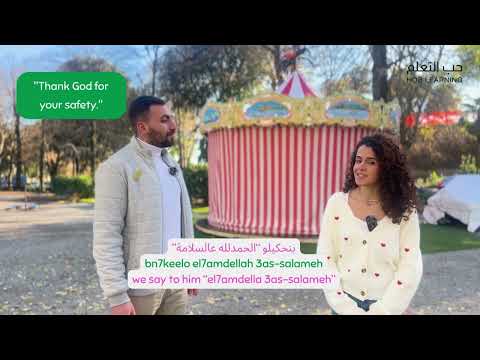
A Quick Mini-Dialogue
Tariq: صباح الخير! كيفك؟ (Sabah el-kheir! Kifik?) “Good morning! How are you?”
Nada: صباح النور! منيحة، الحمد لله، وإنت؟ (Sabah en-nour! Mni7a, el-7amdulillah, w inte?) “Good morning! I’m good, thank God, and you?”
Tariq: تمام، شو أخبارك؟ (Tamam, shu akhbarik?) “Fine, what’s your news?”
Nada: ماشي الحال. (Mashi el-7al.) “Getting by.”
Common Mistakes to Avoid
Four small ones trip up beginners. Using the wrong gender ending, so remember kifak to men, kifik to women. Using formal kayfa 7aluka with a friend, which sounds like a news anchor. Forgetting to ask back with w inte?, which can come off abrupt. And answering with a whole life story, when the expected reply is short and sweet.
Frequently Asked Questions
How do you say “how are you” to a woman in Arabic? Kifik? (كيفِك) or kif 7alik?
How do you say it to a man? Kifak? (كيفك) or kif 7alak?
What’s the formal way? Kayfa 7aluka? (كيف حالك) in Modern Standard Arabic.
How do you answer kifak? Mni7, el-7amdulillah (“good, thank God”), then w inte? (“and you?”).
Is kifak used outside the Levant? It is understood widely but is Levantine. Egyptians say ezzayak, and Gulf speakers say shlonak.
Kifak, Now You’re Ready
Three phrases carry you a long way: kifak (to a man) or kifik (to a woman), the reply mni7, el-7amdulillah, and the all-important w inte? to toss it back. Pair them with a good morning and a few emotion words and you can hold the opening of almost any Levantine conversation. To practice real exchanges with native teachers, Hob Learning is built for exactly that.
Kifak? Time to find out for yourself. Try Hob Learning free for two weeks.
👉 Start your free 2-week trial
📱 Download the Hob Learning app on the App Store or Google Play Store
📲 Follow along on Instagram and TikTok