
.png "Hob Learning")
Mar7aba! Walk into a Levantine café at eight in the morning and the first thing you will hear, over and over, is a bright sabah el-kheir. It is short, warm, easy to say, and it comes with some of the loveliest replies in the whole language, a little back and forth where people trade mornings of light, roses, and jasmine. So here is how to say good morning in Arabic properly, how to answer like a local, and all the sweet and playful versions that make this one of the nicest phrases to learn first.
How Do You Say Good Morning in Arabic?
Good morning in Arabic is صباح الخير (sabah el-kheir). Literally it means “morning of goodness,” and it is used right across Jordan, Palestine, Lebanon, and Syria from dawn until around midday.
Arabic: صباح الخير
Transliteration: sabah el-kheir
Rough pronunciation: sa-BAH el-KHAYR
That is the whole answer to how do you say good morning in Arabic, but the real fun is in the replies, so stay with me.
Pronunciation Tips
Two sounds trip up beginners, and both are worth getting right. In sabah, the final ح (written 7 in Arabizi) is a soft, breathy h made at the back of the throat, like you are gently fogging a mirror. In kheir, the kh (خ) is that raspy sound from the back of the throat, the one in Scottish “loch” or German “Bach.” The el in the middle is simply “the,” and in fast speech it blends softly into the next word. Nail those two throat sounds and your good morning Arabic will sound natural rather than tourist.
Is It Different for a Man, a Woman, or a Group?
Here is some good news for beginners: no. Unlike a lot of Arabic, where phrases shift depending on who you are talking to, sabah el-kheir stays exactly the same whether you are greeting a man, a woman, or a whole room. Saying good morning in Arabic to a man and to a woman is identical, and the reply works the same way for everyone too. One phrase, no endings to juggle.
How to Reply to Sabah el-Kheir
The standard reply is صباح النور (sabah en-nour), “morning of light.” But Levantines rarely stop at standard. They love to answer with a sweeter “morning of something,” turning the exchange into a little game of who can offer the nicer image.
Sabah en-nour (صباح النور): “Morning of light.” This is the standard, polite reply you can use with anyone.
Sabah el-ward (صباح الورد): “Morning of roses.” A warm, friendly response.
Sabah el-yasmin (صباح الياسمين): “Morning of jasmine.” Warm and affectionate, a lovely choice for people you’re fond of.
Sabah el-foll (صباح الفل): “Morning of jasmine blossoms.” Sweet and classic, widely used in everyday conversation.
Sabah el-3asal (صباح العسل): “Morning of honey.” Playful and best saved for close friends.
The rule is simply to match the energy. If someone greets you with a plain sabah el-kheir, sabah en-nour is perfect, and if they come in warm with sabah el-ward, warm it right back. Older Levantines in particular will happily keep the flower game going for a few rounds.
Sweet and Playful Ways to Say Good Morning
Because this phrase is so warm to begin with, it bends easily toward affection. A beautiful good morning in Arabic is usually just sabah el-kheir with an endearment tacked on.
To someone you love:
صباح الخير يا حبيبي
Sabah el-kheir ya 7abibi.
“Good morning, my dear.” (to a woman: ya 7abibti)
Good morning, my heart:
صباح الخير يا قلبي
Sabah el-kheir ya albi.
“Good morning, my heart.” (this is how you say good morning my love in Arabic with real tenderness)
A flirty, flowery one:
صباح الورد يا حلو
Sabah el-ward ya 7ilu.
“Morning of roses, handsome.” (to a woman: ya 7ilwe)
Texting a friend who is still asleep:
صباح الخير! يلا قوم!
Sabah el-kheir! Yalla 2oum!
“Good morning! Come on, get up!”

Other Time-of-Day Greetings
Once you have the morning down, the rest of the day follows the same elegant pattern.
Good evening: مساء الخير (masa2 el-kheir). Reply with masa2 en-nour (مساء النور).
Good night (to a man): تصبح على خير (tisba7 3ala kheir). Reply with w inte min ahl el-kheir (وإنت من أهل الخير).
Good night (to a woman): تصبحي على خير (tisba7i 3ala kheir). Reply with w inti min ahl el-kheir (وإنتي من أهل الخير).
Good night (to a group): تصبحوا على خير (tisba7o 3ala kheir). Reply with w intu min ahl el-kheir (وإنتو من أهل الخير).
Other Greetings Worth Knowing
When people search for a greeting in Arabic, these are the everyday ones you will actually hear in the Levant, and they pair naturally with your good morning.
مرحبا (marhaba): hello, the classic Levantine greeting. A charming reply is مرحبتين (marhabtein), literally “two hellos,” so you are one-upping their one.
أهلاً (ahlan): hi or welcome. Reply with أهلين (ahlein) or أهلاً فيك (ahlan fiik).
أهلاً وسهلاً (ahlan w sahlan): a warmer, more heartfelt “welcome.”
السلام عليكم (as-salamu 3alaykum): “peace be upon you,” answered with وعليكم السلام (wa 3alaykum as-salam).
كيفك؟ (kifak? to a man, kifik? to a woman): “how are you?”, the natural follow-up to any greeting.
Explore, Learn, and Try It Free for 2 Weeks!
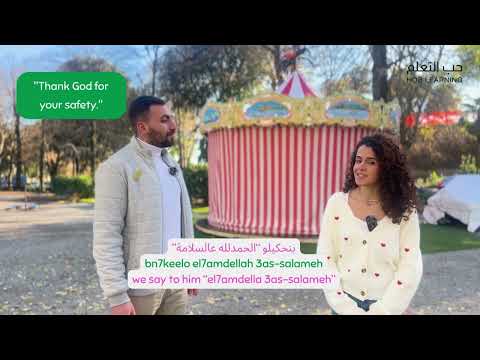
Curious about learning with us? Start with a free course video, then try Hob Learning free for 2 weeks.
A Note on “Hello in Muslim”
A lot of people search for “hello in Muslim” or “good morning in Muslim,” so it is worth clearing up gently: there is no “Muslim language.” The language is Arabic, and it is spoken by Muslims, Christians, Druze, and others across the Levant. As-salamu 3alaykum is the religious greeting used by Muslims worldwide, while marhaba and sabah el-kheir are everyday greetings that absolutely everyone uses, whatever their faith.
Good Morning in Other Arabic Dialects
The phrase barely changes across the Arab world, which makes it a safe one to carry anywhere. The replies differ more than the greeting itself.
Levantine: sabah el-kheir.
Egyptian: sabah el-kheir, said with a faster, clipped rhythm.
Gulf: sabah el-kheir.
Moroccan (Darija): sbah l-khir, with the first word shortened.
A Quick Mini-Dialogue
Here is the whole thing in action, the way it really sounds first thing.
Layla: صباح الخير! (Sabah el-kheir!) “Good morning!”
Sami: صباح الورد! كيفك؟ (Sabah el-ward! Kifik?) “Morning of roses! How are you?”
Layla: منيحة، الحمد لله. (Mni7a, el-7amdulillah.) “Good, thank God.”
Notice Sami warming the reply up to sabah el-ward rather than the plain sabah en-nour. That small choice is pure Levantine.
Frequently Asked Questions
What does sabah el-kheir mean? “Morning of goodness,” which is to say “good morning.”
How do you reply to good morning in Arabic? Say sabah en-nour (“morning of light”), or warm it up with sabah el-ward (“morning of roses”).
Is good morning in Arabic different for men and women? No. Sabah el-kheir is the same for everyone.
How do you say “good morning, my love” in Arabic? Sabah el-kheir ya 7abibi to a man, or ya 7abibti to a woman.
Until what time can you say sabah el-kheir? Usually until around midday. After that, switch to masa2 el-kheir in the evening.
Sabah el-Kheir, Now You Are Ready
Learn just two things and you are set: sabah el-kheir to open the day, and sabah en-nour to answer it. Add sabah el-ward when you want to be warm, use it every single morning, and within a week it will feel completely natural. These little greetings are the easiest, friendliest way into Levantine Arabic, and they pair beautifully with words like yalla and habibi, or the family gathering phrases you will use right after. To hear these greetings from native speakers and start sounding natural fast, Hob Learning is built for exactly that.
Sabah el-kheir, time to start. Try Hob Learning free for two weeks and learn Levantine Arabic through native speakers and real conversations.
👉 Start your free 2-week trial
📱 Download the Hob Learning app on the App Store or Google Play Store
📲 Follow along on Instagram and TikTok